
Training Course #3
Developing Personal Characteristics
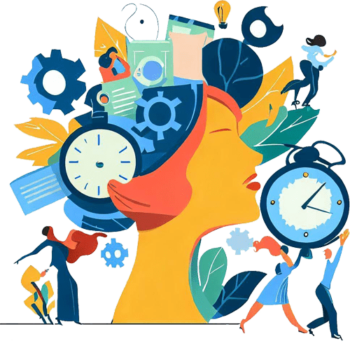
The goal of the course is to pick up and improve the right skills, habits and emotional intelligence to achieve your goals more effectively.
To Master the Entire Course
Study Each Course Sequentially
Download Working Materials
Watch Online Courses
Read Recommended Books
What Can This Developing Personal Characteristics Training Help You Create
Stable Basis for Achieving Goals
Personal Development Strategy
Guide to Organizing Your Emotions
The entire program "Personal Leadership Strategy" consists of 6 courses:
FAQ on Developing Personal Characteristics
What is personal characteristic development?
Developing personality characteristics means the process of consciously and systematically developing and improving various aspects of personality, such as skills, qualities, behavior, emotional intelligence, and other aspects that help us become better versions of ourselves.
What characteristics can be developed?
You can develop a variety of personal characteristics such as communication skills, leadership, creative thinking, emotional intelligence, time management, self-confidence, stress-resistance, decision-making skills, self-organization, adaptability and others.
What role does self-reflection play in the development of personality characteristics?
Self-reflection is an important part of developing personal characteristics. It helps us better understand ourselves, identify our strengths and weaknesses, identify areas to work on, and develop an action plan for developing specific characteristics. Self-analysis allows us to become aware of our habits, beliefs and behaviors, which is a key step toward personal growth.
What role does feedback play in the development of personality characteristics?
Feedback plays an important role in personality development because it provides us with information about our actions, behaviors and performance. Through feedback we can get valuable comments and advice from others to help us see our strengths and areas where there is potential for improvement. Feedback helps us recognize our problems and bottlenecks so that we can take steps to correct them.
How to manage time for the effective development of personal characteristics?
Time management is a key factor in effective personality development. It is important to identify your priorities, create an action plan, set realistic deadlines, avoid distractions and use time management techniques, such as creating a schedule, delegating tasks, setting priorities and using time management techniques, to use your time effectively as part of personal development.
What obstacles can arise in the process of developing personal characteristics and how to overcome them?
Various obstacles can arise in the process of developing personal characteristics. Some of them include lack of motivation, lack of time, fear of failure or rejection, lack of resources or support, habitual behavior patterns, etc. To overcome these obstacles, it is important to be aware of your strengths and weaknesses, develop strategies for overcoming obstacles, get support from others, be willing to adapt and adjust your plan, and not be afraid of mistakes and failures, seeing them as lessons and opportunities for growth.
What resources can be used to develop personal characteristics?
There are many resources you can use to develop your personality. Some of them include books, online courses and trainings, audio books and podcasts, video lessons, blogs and articles, workshops and conferences, mentors and coaches, communities and forums for sharing experiences and support, and various apps and tools for self-development.
How to measure the success of the development of personal characteristics?
The success of personal development can be measured by a variety of measures depending on specific goals. These can include professional achievements, improving relationships, increasing satisfaction and well-being, developing new skills and attributes, increasing self-esteem and confidence, and achieving personal goals and fulfilling one’s life purpose.
What to do if faced with difficulties in the process of personality development?
If you encounter difficulties in your personal development process, it is important not to panic or despair. Instead, you can review your goals and action plan, seek additional support or resources, contact a mentor or coach, develop coping strategies, consult experts or specialists in the relevant field, and continue to work persistently on developing your characteristics.
Can the development of personality traits affect a career?
Yes, developing personality characteristics can have a significant impact on your career. Developing leadership skills, communication skills, creative thinking, time management and other characteristics can increase your competitiveness in the job market, help you get promoted or move to a new position, improve your relationships with peers and management, expand your professional networking circle and create new career opportunities.
Why is developing personality characteristics important?
Developing personal characteristics plays a key role in our private and professional lives. It helps us improve our skills and qualities, develop leadership skills, enhance our self-awareness and emotional intelligence, increase our productivity and effectiveness, and improve the quality of our relationships and success.
How do you begin to develop personal characteristics?
To begin developing personal characteristics, it is important to first identify the specific characteristics you want to develop. Then you can use various methods and approaches, such as reading books, participating in trainings and seminars, finding a mentor or coach, introspection, exercises and practice, and constant self-improvement.
What are the benefits of developing personal characteristics in the workplace?
Developing personal characteristics in the workplace has many benefits. It helps improve communication and collaboration with coworkers, develop leadership skills, increase efficiency and productivity, enhance professional reputation, improve the ability to manage stress and conflict, develop creative thinking and innovation, and enhance career opportunities.
What role does continuous learning play in the development of personal characteristics?
Continuous learning is an integral part of personal development. Through training we acquire new knowledge, skills and tools that help us develop different aspects of our personality. Training broadens our horizons, allows us to follow the latest trends and best practices, and stimulates us to grow and improve ourselves.
What role do mentors play in the development of personal characteristics?
Mentors play an important role in the development of personal characteristics. They are experienced and successful people who can provide us with valuable guidance, support, and direction. Mentors help us expand our horizons, provide feedback and advice, and share their experience and knowledge so that we can grow and develop in the right direction.
How long can the process of developing personality characteristics take?
The process of personality development is individual and can take different amounts of time, depending on specific characteristics and goals. It can take anywhere from a few weeks to several years. It is important to remember that personality development is an ongoing process and requires constant self-improvement and lifelong learning.
How do you measure progress in the development of personal characteristics?
Assessment of progress in developing personal characteristics can be accomplished through self-reflection, feedback from others, comparison with previous states, and achievement of goals. It is important to establish specific indicators or metrics to assess progress and to conduct periodic assessments to see what changes and improvements have occurred.
How to maintain motivation in the development of personality characteristics?
Supporting motivation in the process of personal development plays an important role. Some ways include setting clear and inspiring goals, breaking them down into smaller achievable steps, rewarding oneself for achievements, creating incentives and rewards, finding support in loved ones or the community, constantly reminding oneself of the importance and benefits of personality development, and constantly updating and adapting the action plan.
Can the development of personality characteristics lead to changes in relationships with others?
Yes, the development of personality characteristics can lead to changes in our relationships with others. Improved communication skills, emotional intelligence, leadership abilities, and other aspects of personality can improve our interactions with others, help us better understand their needs and feelings, resolve conflicts, build healthy relationships, and develop effective collaboration.
What can you contribute to personal development every day?
Every day we can contribute to our personal development through small but constant actions. This can be reading books or articles, listening to inspiring podcasts or audiobooks, setting goals and planning actions, practicing self-reflection and self-analysis, learning new skills or languages, participating in trainings or courses, keeping a journal or blog, finding inspiration and motivation, and actively applying the learned knowledge and skills in daily life.